
 Image 1 of 1
If your child has an Individual Education Plan — or an PLSP, a Learning Support Plan, a Personalised Learning Plan, or whatever your school calls it, you may have signed it at the end of a meeting, filed it away, and quietly wondered: is this actually good enough?
The honest answer is: not always.
Some IEPs are detailed, collaborative documents that genuinely guide what happens for your child every single day. Others are templated, vague, and signed off quickly, meeting a compliance requirement without truly meeting your child's needs.
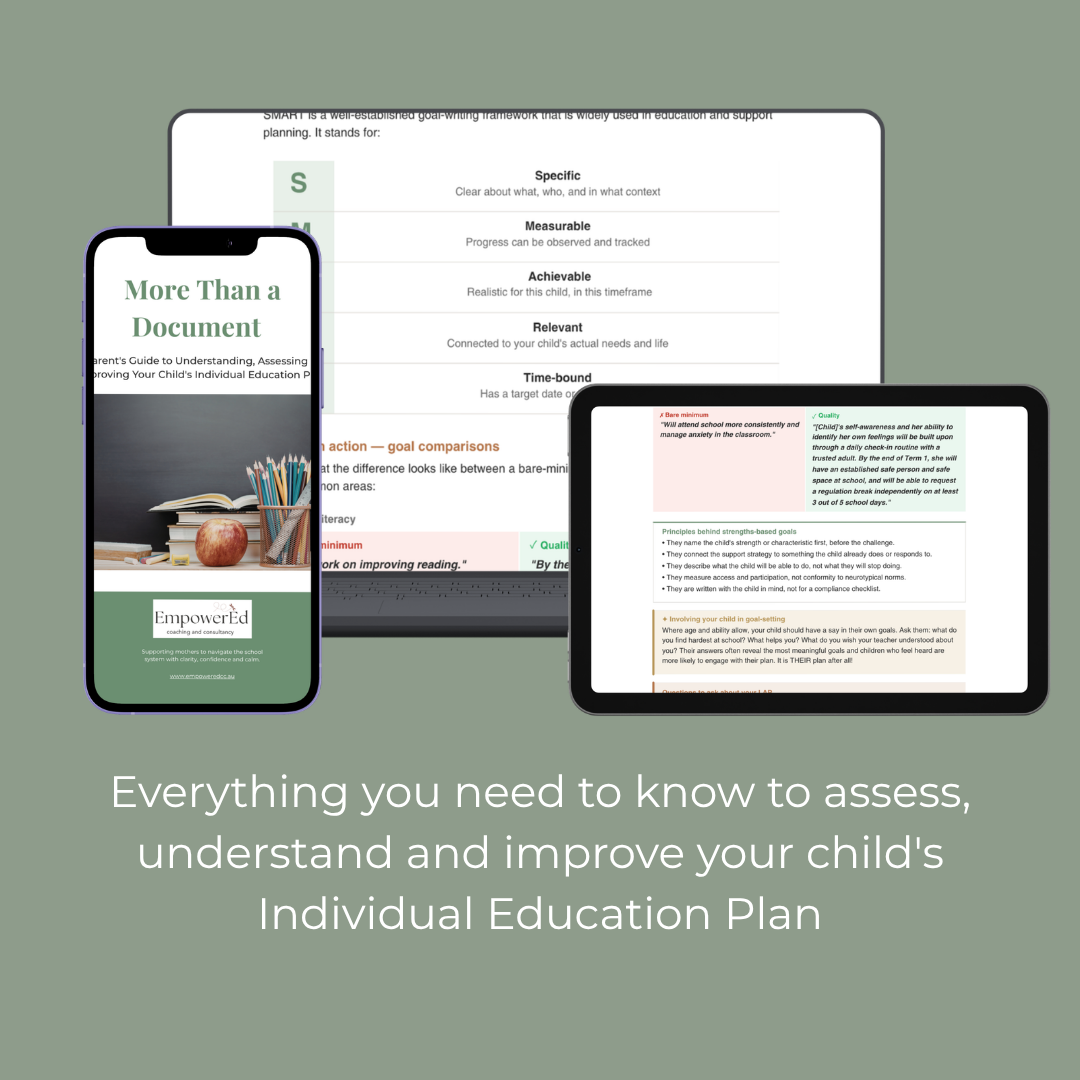
More Than a Document walks you through everything that should be in a quality Learning Adjustment Plan, shows you what strong goals look like versus bare-minimum ones, and introduces you to a strengths-based approach to how your child's goals can be written. Because a plan that only describes what's hard doesn't capture who your child actually is.
This resource is for you if:
You've signed a plan that didn't feel quite right but you didn't know why.
If you've been told your child has support in place, but you're not sure what that actually means day-to-day.
If your child's plan describes everything they struggle with and nothing they're good at.
If you want to walk into your next review knowing exactly what to look for and what to ask.
Your child deserves a plan that sees them fully. This guide helps you make sure they have one.
If your child has an Individual Education Plan — or an PLSP, a Learning Support Plan, a Personalised Learning Plan, or whatever your school calls it, you may have signed it at the end of a meeting, filed it away, and quietly wondered: is this actually good enough?
The honest answer is: not always.
Some IEPs are detailed, collaborative documents that genuinely guide what happens for your child every single day. Others are templated, vague, and signed off quickly, meeting a compliance requirement without truly meeting your child's needs.
More Than a Document walks you through everything that should be in a quality Learning Adjustment Plan, shows you what strong goals look like versus bare-minimum ones, and introduces you to a strengths-based approach to how your child's goals can be written. Because a plan that only describes what's hard doesn't capture who your child actually is.
This resource is for you if:
You've signed a plan that didn't feel quite right but you didn't know why.
If you've been told your child has support in place, but you're not sure what that actually means day-to-day.
If your child's plan describes everything they struggle with and nothing they're good at.
If you want to walk into your next review knowing exactly what to look for and what to ask.
Your child deserves a plan that sees them fully. This guide helps you make sure they have one.