Image 1 of 1
What Your Child's IEP Should Actually Say
Your child has a learning plan. Maybe it's called an IEP, a PLSP, a Personalised Learning Plan, a Learning Support Plan — the name changes depending on your school and state. Whatever it's called, you probably signed it at the end of a meeting without much time to read it properly.
And quietly, you've wondered: is this actually good enough?
The honest answer is: not always.
Some plans are detailed, collaborative documents that genuinely shape what happens for your child every single day. Others are templated, vague, and signed off quickly — meeting a compliance requirement without truly meeting your child's needs. The difference often comes down to whether the goals are specific, measurable, and actually based on who your child is.
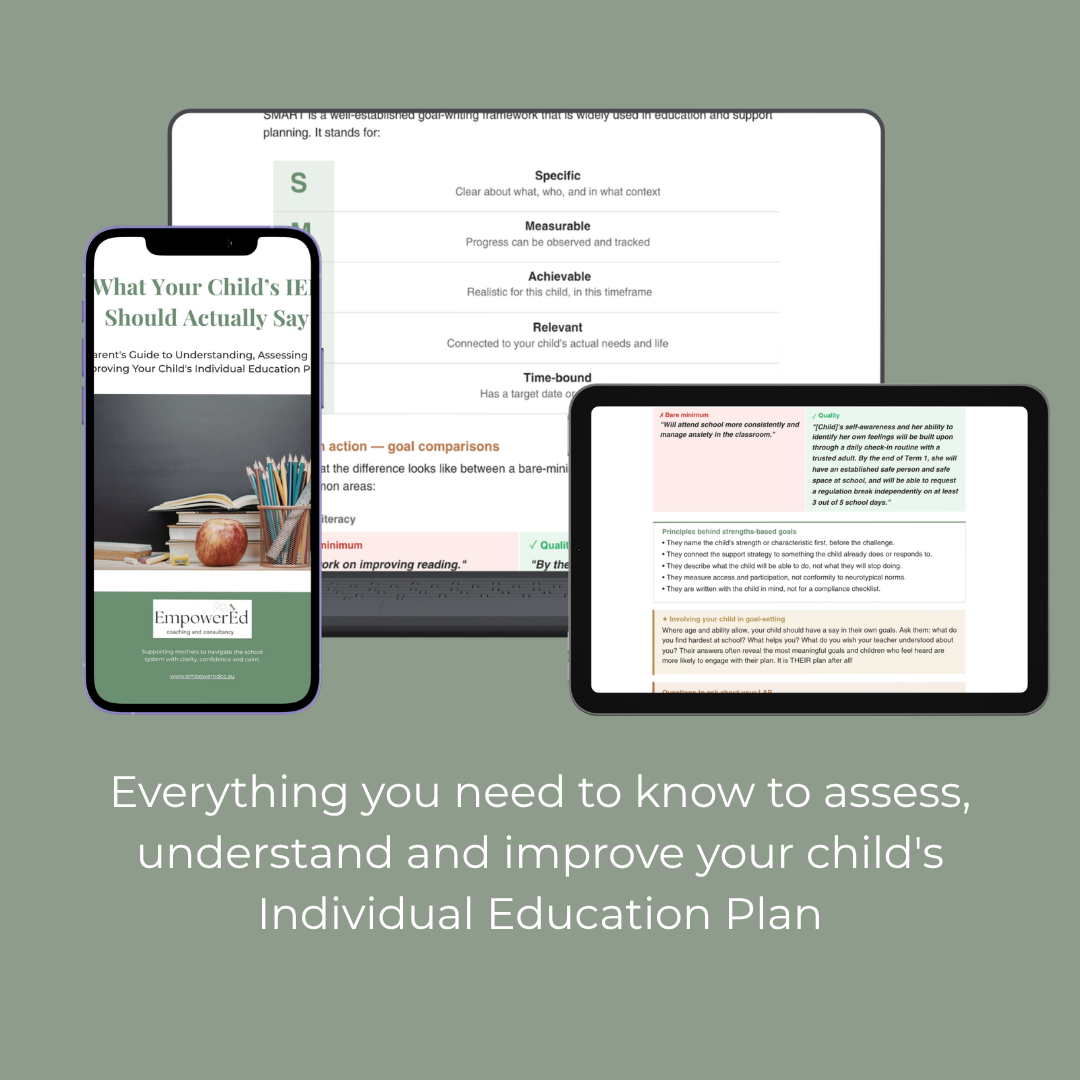
What Your Child's IEP Should Actually Say walks you through what a quality learning support plan looks like — and gives you the knowledge to recognise when yours falls short, so you can go back and ask for better.
Inside you'll find:
A clear breakdown of what should be in every quality learning support plan, section by section
The difference between a strong, specific goal and a vague, bare-minimum one — with real examples of both
An introduction to SMART goal frameworks and how they apply to your child's plan
A strengths-based approach to goal writing, because a plan that only describes what's hard doesn't capture who your child actually is
A review checklist to use at your child's next planning meeting
Questions to ask if the plan doesn't meet the standard it should
This resource is for you if:
You've signed a plan that didn't feel quite right, but you didn't know why
You've been told your child has support in place, but you're not sure what that means day to day
Your child's plan describes everything they struggle with and nothing they're good at
You want to walk into your next review knowing exactly what to look for — and what to ask for
Your child deserves a plan that sees them fully. This guide helps you make sure they have one.
Instant download PDF — $29.90 | Applicable to schools in Australia, the UK, the US, Canada, and beyond.
Your child has a learning plan. Maybe it's called an IEP, a PLSP, a Personalised Learning Plan, a Learning Support Plan — the name changes depending on your school and state. Whatever it's called, you probably signed it at the end of a meeting without much time to read it properly.
And quietly, you've wondered: is this actually good enough?
The honest answer is: not always.
Some plans are detailed, collaborative documents that genuinely shape what happens for your child every single day. Others are templated, vague, and signed off quickly — meeting a compliance requirement without truly meeting your child's needs. The difference often comes down to whether the goals are specific, measurable, and actually based on who your child is.
What Your Child's IEP Should Actually Say walks you through what a quality learning support plan looks like — and gives you the knowledge to recognise when yours falls short, so you can go back and ask for better.
Inside you'll find:
A clear breakdown of what should be in every quality learning support plan, section by section
The difference between a strong, specific goal and a vague, bare-minimum one — with real examples of both
An introduction to SMART goal frameworks and how they apply to your child's plan
A strengths-based approach to goal writing, because a plan that only describes what's hard doesn't capture who your child actually is
A review checklist to use at your child's next planning meeting
Questions to ask if the plan doesn't meet the standard it should
This resource is for you if:
You've signed a plan that didn't feel quite right, but you didn't know why
You've been told your child has support in place, but you're not sure what that means day to day
Your child's plan describes everything they struggle with and nothing they're good at
You want to walk into your next review knowing exactly what to look for — and what to ask for
Your child deserves a plan that sees them fully. This guide helps you make sure they have one.
Instant download PDF — $29.90 | Applicable to schools in Australia, the UK, the US, Canada, and beyond.
Ready to review the plan? Make sure you're fully prepared for that meeting with Walk In Ready: School meeting prep guide for parents
The step-by-step guide for mothers who want to feel prepared, grounded and confident before every school meeting or review.
School meetings can feel overwhelming, especially when you're advocating for a child with additional needs, navigating a system that doesn't always speak plain English, or walking into a room where you feel like the least powerful person at the table. Whether you're in Australia, the UK, the US, Canada or anywhere else in the world, the experience of navigating a school system as a mother is remarkably universal. The feelings, the dynamics, the need to advocate clearly and confidently, they don't change with the postcode.
This resource changes that.
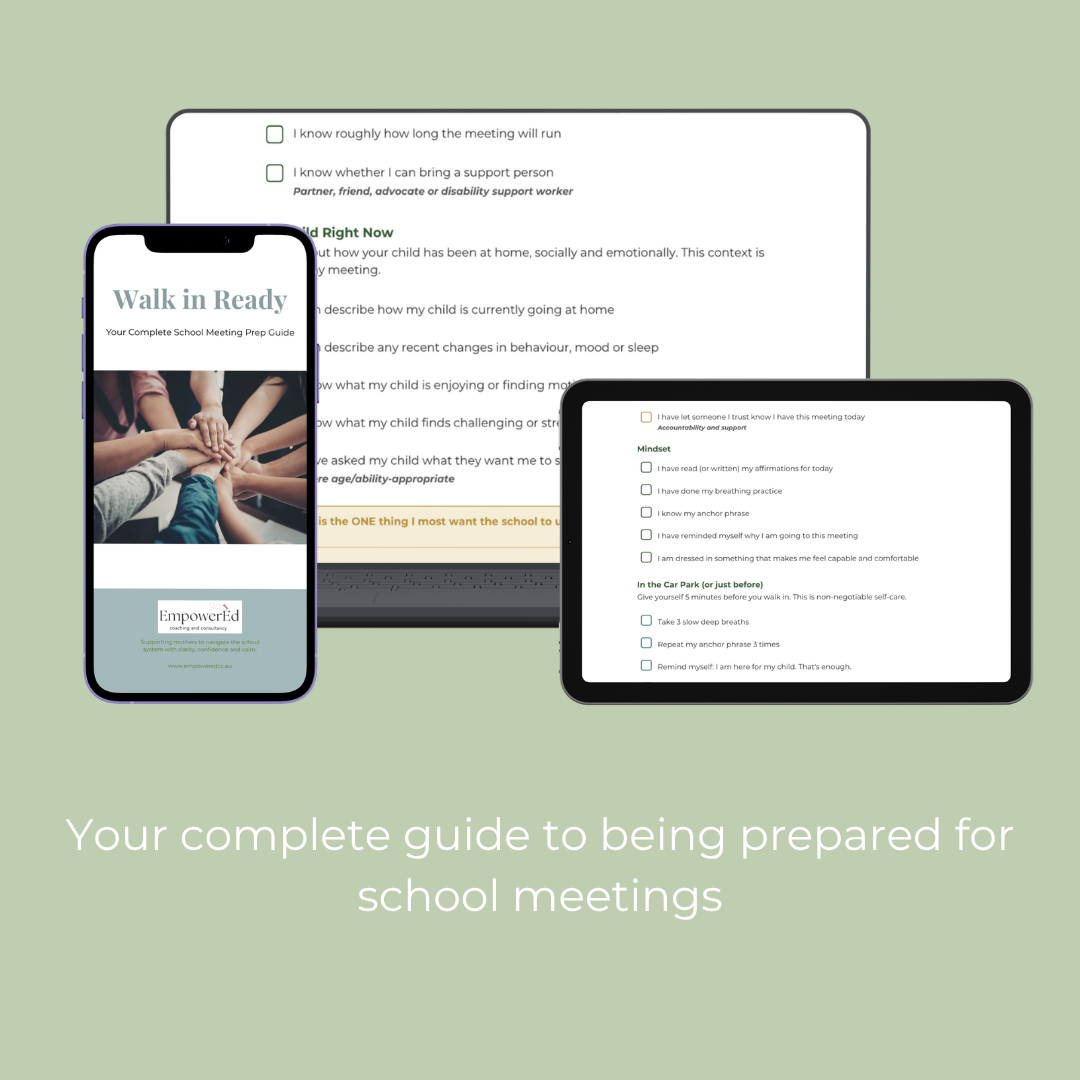
Walk in Ready walks you through everything you need to do, know, ask and bring before every school meeting - from routine parent-teacher catch-ups to annual reviews, IEP planning sessions and challenging conversations with the principal.
But it goes beyond the practical. Because showing up prepared on paper isn't enough if you're flooded with anxiety the moment you sit down. That's why this resource includes a full mindset and mental preparation section including breathing tools, anchor phrases, affirmations and a grounding ritual, so you can walk in feeling like yourself.
Inside you'll find:
A complete before-meeting checklist covering your child, your rights and the school system
A documents and practical prep guide so nothing gets left behind
Research and question-planning prompts to help you prepare what to say
Breathing exercises and grounding tools to calm your nervous system
Anchor phrases and affirmations written specifically for school meeting anxiety
In-the-room strategies and helpful conversation phrases
A post-meeting debrief and follow-up checklist
Reflection spaces throughout to make it personal to you and your child
This resource is for you if: You've ever left a school meeting wishing you'd said more. If you've cried in the car park. If you've agreed to something in the room that didn't sit right. If you want to walk in next time feeling ready.
You belong at that table. This checklist helps you own your seat at it.
Instant download PDF — $39.90 | Designed for parents navigating school systems in Australia and internationally.