Write It Right gives you five ready-to-use email templates for the moments that matter most. Applicable to schools around the world, each email template is professionally crafted, warm but firm, and comes with a detailed explanation of why each section is written the way it is. Because when you understand the intention behind the language, you can adapt these templates with confidence, not just copy them blindly.
This resource was designed by an educator and school advocate with years of experience on both sides of these conversations.
Inside you'll find:
* A template for requesting a meeting including how to frame your topics so the teacher feels prepared, not ambushed
* A template for following up after a meeting: the email that creates accountability and a paper trail in one
* A template for raising a concern how to name something that isn't right while keeping the door open for collaboration
* A template for formally requesting support or adjustments grounded in your child's professional reports and their right to reasonable
adjustments
* A template for escalating a concern: when you've tried the normal channels and need to go further, without burning bridges
* Annotation notes throughout explaining the strategic thinking behind every key phrase
* Guidance on tone, timing, and what to do if you don't hear back
Every template includes [bracketed] personalisation prompts and is ready to copy, adapt, and send.
This resource is for you if: you've stared at a blank email for twenty minutes and not known where to start; if you've sent something in a moment of frustration and regretted it; if you've been trying to raise the same concern for months and can't seem to get any traction; and/or if you want to feel like someone who knows how to navigate this because the right words really do make a difference.
Your voice matters. This resource helps you use it well.
Instant download PDF — $29.90 | Applicable to schools in Australia, the UK, the US, Canada, and beyond.
Write It Right gives you five ready-to-use email templates for the moments that matter most. Applicable to schools around the world, each email template is professionally crafted, warm but firm, and comes with a detailed explanation of why each section is written the way it is. Because when you understand the intention behind the language, you can adapt these templates with confidence, not just copy them blindly.
This resource was designed by an educator and school advocate with years of experience on both sides of these conversations.
Inside you'll find:
* A template for requesting a meeting including how to frame your topics so the teacher feels prepared, not ambushed
* A template for following up after a meeting: the email that creates accountability and a paper trail in one
* A template for raising a concern how to name something that isn't right while keeping the door open for collaboration
* A template for formally requesting support or adjustments grounded in your child's professional reports and their right to reasonable
adjustments
* A template for escalating a concern: when you've tried the normal channels and need to go further, without burning bridges
* Annotation notes throughout explaining the strategic thinking behind every key phrase
* Guidance on tone, timing, and what to do if you don't hear back
Every template includes [bracketed] personalisation prompts and is ready to copy, adapt, and send.
This resource is for you if: you've stared at a blank email for twenty minutes and not known where to start; if you've sent something in a moment of frustration and regretted it; if you've been trying to raise the same concern for months and can't seem to get any traction; and/or if you want to feel like someone who knows how to navigate this because the right words really do make a difference.
Your voice matters. This resource helps you use it well.
Instant download PDF — $29.90 | Applicable to schools in Australia, the UK, the US, Canada, and beyond.

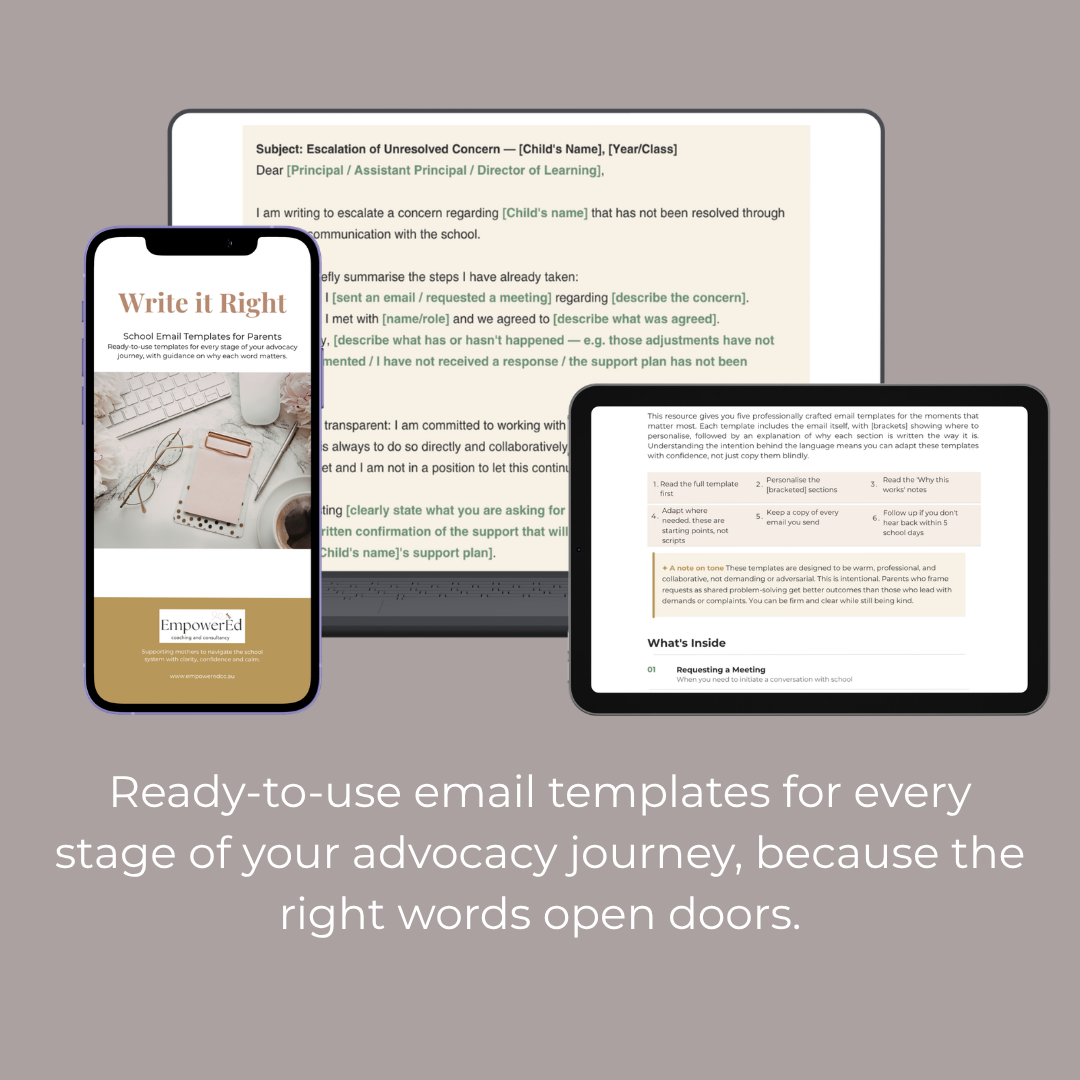 Image 1 of 1